
Introduction
Have you ever searched for a business on Google Maps and noticed that its position changes depending on where you search from? A business might appear in the top three results in one neighbourhood but fall much lower in another area. This is a common situation for businesses that depend on local customers.
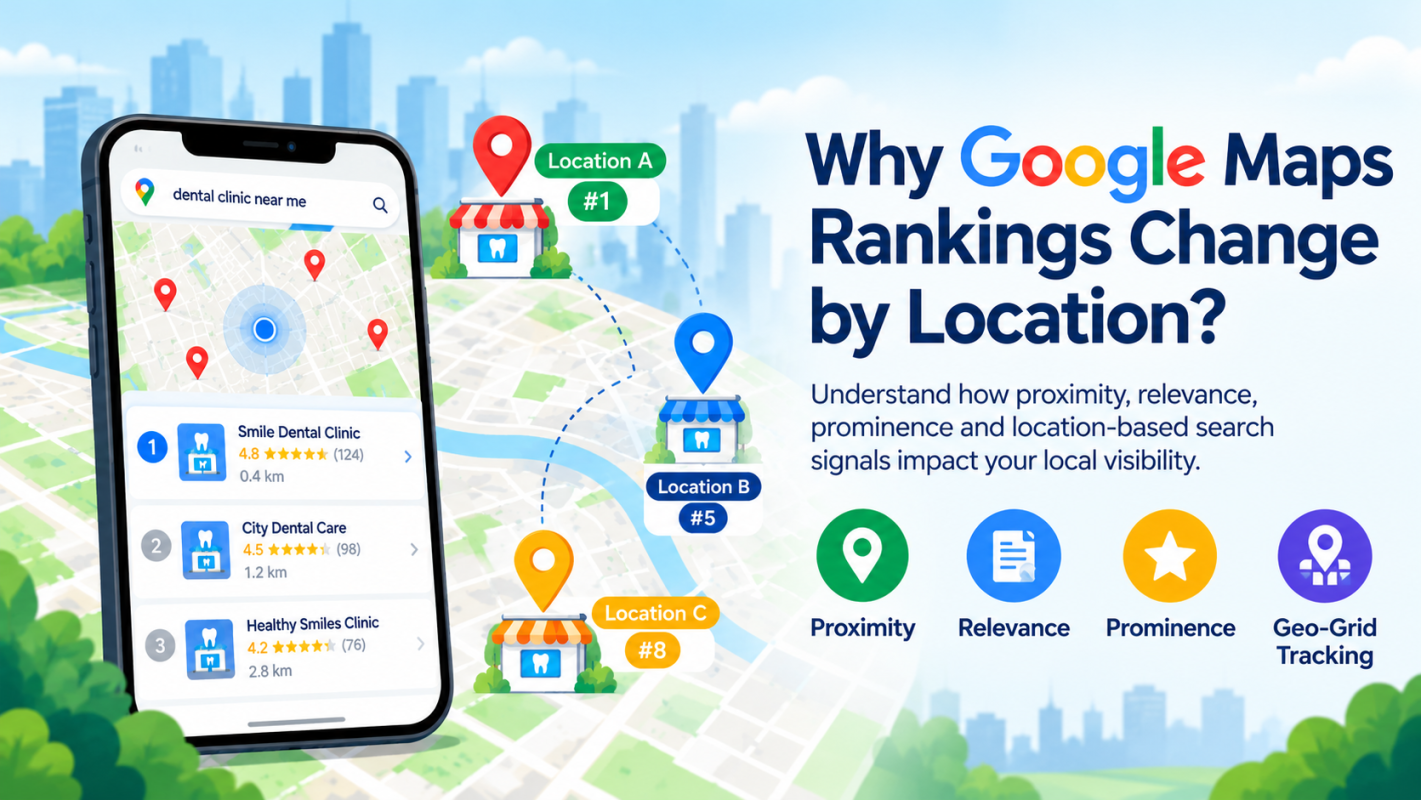
Google Maps rankings are not the same for every searcher. Google considers several factors when deciding which businesses to display for a particular local search. These include the searcher's location, the relevance of a business profile, its prominence, and other local search signals.
For business owners and digital marketing professionals, understanding these differences is important. Checking rankings from just one location may not provide an accurate picture of overall local search performance.
In this guide, we will explore why Google Maps rankings change from one location to another, which factors influence local visibility, and how businesses can monitor their performance across different geographical areas using LocalSEOTool - Local SEO Tool.
What Are Google Maps Rankings?
Google Maps rankings refer to the positions businesses receive in Google Maps search results when users search for products or services in a particular area.
For example, someone searching for a dentist, restaurant, salon, or digital marketing agency may see a list of nearby businesses. These results are influenced by Google's local ranking systems.
Google primarily considers three factors:
- Relevance: How well a business profile matches what someone is searching for.
- Distance: How far a business is from the searcher or the location mentioned in the search.
- Prominence: How well-known and established a business appears to be, based on information such as reviews, links, and online presence.
These factors work together to determine which businesses appear prominently in local search results.
Understanding them helps businesses build a more effective local SEO strategy.
7 Reasons Why Google Maps Rankings Change From One Location to Another
1. Searcher's Physical Location
One of the biggest reasons for changing Google Maps rankings is the searcher's physical location.
Google attempts to show relevant nearby businesses based on where a person is searching. Therefore, two people searching for the same service from different neighbourhoods may receive different results.
For example, a restaurant located in Satellite, Ahmedabad, may appear prominently when someone searches nearby. However, a person searching from Bopal may see different restaurants ranking higher.
This happens because distance is an important factor in local search results.
What businesses can do:
- Keep their Google Business Profile address accurate.
- Maintain consistent business information across online platforms.
- Understand which geographical areas generate the most visibility.
- Monitor local rankings from multiple locations instead of relying on a single search.
2. Relevance of Your Google Business Profile
Google needs to understand what your business offers before displaying it for relevant searches.
If your Google Business Profile contains incomplete or inaccurate information, it may be less relevant to certain search queries.
For example, a digital marketing agency offering SEO, social media marketing, and website development should clearly communicate these services through its business profile.
To improve profile relevance:
- Select the most appropriate primary business category.
- Add relevant secondary categories where applicable.
- Provide accurate business descriptions.
- Keep business hours and contact information updated.
- Add genuine photographs and relevant service information.
- Maintain accurate website and business details.
A complete and accurate profile helps Google understand your business and its services.
3. Local Competition in Different Neighbourhoods
Your business may face different competitors depending on the location from which someone searches.
A business might have strong visibility in one neighbourhood but face more established competitors in another.
For example, an SEO agency may rank well in one part of Ahmedabad but struggle to appear in the top results in areas where several established agencies operate.
Local competition can differ because of:
- Number of businesses offering similar services.
- Competitors' profile completeness.
- Review quantity and quality.
- Website authority and local relevance.
- Overall business prominence.
What businesses can do:
Regularly analyse competitors appearing in different geographical areas. Identify what they are doing well and look for opportunities to improve your own local presence.
4. Customer Reviews and Online Reputation
Customer reviews help people evaluate a business before choosing its products or services. They also contribute to Google's understanding of business prominence.
Businesses with genuine, detailed customer feedback can build stronger trust with potential customers.
However, having the highest number of reviews does not automatically guarantee the top Google Maps position.
To maintain a healthy review profile:
- Encourage genuine customers to share their experiences.
- Respond professionally to positive and negative feedback.
- Monitor reviews regularly.
- Address customer concerns appropriately.
- Avoid purchasing fake reviews or using misleading review-generation practices.
Consistent reputation management supports customer confidence and contributes to a stronger online presence.
5. Business Information Across Online Directories
Your business information should remain consistent across different online platforms.
If your business name, address, phone number, or website details vary across directories, it can create confusion for customers and make it harder to maintain a consistent online presence.
These details are commonly known as NAP information (Name, Address, Phone Number).
Businesses should regularly check their listings on:
- Google Business Profile
- Business directories
- Local citation websites
- Industry-specific directories
- Social media platforms
Maintaining accurate business information across these platforms supports local SEO efforts and helps customers find the correct business details.
6. Website Authority and Local SEO Signals
Google Maps visibility is not determined by your business profile alone. Your website and broader online presence can also contribute to local search performance.
A well-optimized website helps search engines understand your business, services, and geographical relevance.
Here are some useful website optimization practices:
- Create dedicated service pages for important offerings.
- Include relevant location information naturally.
- Optimize page titles and meta descriptions.
- Add relevant internal links between website pages.
- Publish informative blogs related to local search queries.
- Make sure your website works properly on mobile devices.
- Maintain a clear website structure.
For example, a business targeting customers in Ahmedabad can create relevant service pages that explain its offerings and geographical coverage.
Avoid creating multiple low-quality location pages with nearly identical content. Each page should provide genuine value to visitors.
7. Google Maps Rankings Can Change Over Time
Local search rankings are not permanent. A business that appears in the top three results today may experience a different position later.
Several factors can contribute to ranking changes:
- New competitors entering the local market.
- Changes in competitors' business profiles.
- Updated customer reviews.
- Changes in business information.
- Google's search and ranking system updates.
- Changes in the searcher's location.
This is why businesses should not depend on a single ranking check.
Regular monitoring helps identify changes and understand whether local SEO activities are improving visibility.
Why Tracking Google Maps Rankings From Multiple Locations Matters
Checking your Google Maps position from your business address provides only a limited understanding of your local search performance.
Your potential customers may be searching from different streets, neighbourhoods, and nearby areas.
When someone searches for the same service from different parts of the city, the business may receive different ranking positions.
This is where geo-grid rank tracking becomes useful.
A geo-grid divides a geographical area into multiple points and checks how a business performs for a particular keyword at those locations.
It helps businesses:
- Identify areas where they have strong Google Maps visibility.
- Discover neighbourhoods where their rankings are weak.
- Compare local search performance across different locations.
- Understand how visibility changes across a service area.
- Evaluate local SEO progress over time.
Instead of looking at one ranking position, businesses can understand their visibility across a wider geographical area.
How LocalSEOTool - Local SEO Tool Helps Monitor Local SEO Performance
Managing local search visibility involves several activities, including ranking monitoring, business profile management, reputation monitoring, and performance reporting.
LocalSEOTool - Local SEO Tool helps businesses and digital marketing agencies simplify important local SEO activities through a centralized platform.
Here are some ways a local SEO platform can support your optimization workflow.
1. Monitor Local Keyword Rankings
Tracking keyword positions helps you understand how your business performs for relevant local search terms.
Regular monitoring makes it easier to identify ranking changes and evaluate the progress of your local SEO activities.
2. Understand Location-Based Search Performance
Geo-grid rank tracking helps visualize how your business performs across different geographical points.
This provides more useful insights than checking Google Maps rankings from only one location.
3. Manage Online Reviews
Customer reviews are an important part of online reputation management.
Monitoring customer feedback and managing review responses helps businesses maintain communication with customers and understand their experiences.
4. Simplify Google Business Profile Management
Managing business profile activities regularly can become time-consuming, particularly for agencies handling multiple clients.
A centralized local SEO workflow can help simplify profile-related management activities.
5. Improve Reporting and Performance Monitoring
SEO agencies need to communicate campaign progress clearly to their clients.
Organized reports help present ranking trends, local search visibility, and other important performance information in an understandable format.
By bringing essential local SEO activities together, LocalSEOTool - Local SEO Tool aims to make local search management more organized and efficient.
Explore the platform: LocalSEOTool - Local SEO Tool.
Best Practices to Improve Google Maps Visibility Across Different Locations
Businesses looking to improve their local search presence should focus on consistent optimization rather than trying to manipulate rankings.
Consider these practical steps:
Remember that no single activity guarantees a top Google Maps position. Local SEO requires continuous monitoring, accurate information, and a customer-focused approach.
Frequently Asked Questions (FAQs)
1. Why do Google Maps rankings differ by location?
Google Maps rankings differ because Google considers the searcher's location, business relevance, and prominence. As a result, the same business may appear in different positions depending on where someone searches.
2. Does distance affect Google Maps rankings?
Yes. Distance is one of Google's primary local ranking factors. Businesses closer to the searcher's location may have an advantage when other relevant factors are comparable.
3. What is geo-grid rank tracking in local SEO?
Geo-grid rank tracking is a method of checking business rankings across multiple geographical points within a selected area. It helps businesses understand where they have stronger or weaker local search visibility.
4. How often should businesses check Google Maps rankings?
Businesses should monitor their rankings regularly, such as weekly or monthly, depending on their competition and SEO goals. Consistent tracking helps identify changes and evaluate optimization efforts.
5. Can customer reviews improve Google Maps visibility?
Reviews contribute to Google's assessment of business prominence and help customers make informed decisions. However, reviews alone do not guarantee higher rankings.
6. Why is my business visible in one area but not another?
Your business may have stronger relevance or prominence in one area, while distance and local competition may affect visibility elsewhere. This is why monitoring rankings across multiple geographical locations is useful.
7. Which tool can help track Google Maps rankings across different locations?
A local SEO platform with geo-grid rank tracking capabilities can help monitor business visibility across different geographical points. LocalSEOTool - Local SEO Tool provides local SEO features designed to help businesses and agencies manage their local search activities.
Conclusion
Google Maps rankings can change from one location to another because local search results depend on several factors, including distance, relevance, prominence, and competition. A business may perform well in one neighbourhood but have limited visibility in another.
For this reason, checking rankings from a single location is not enough to understand your overall local search performance. Businesses should focus on complete Google Business Profile optimization, genuine customer reviews, accurate business information, website improvements, and regular location-based ranking monitoring.
With the right strategy and tracking approach, businesses can identify local SEO opportunities and make more informed optimization decisions.
Want to understand how your business performs across different locations? Explore LocalSEOTool - Local SEO Tool and simplify your local SEO management with tools designed for businesses and digital marketing agencies.